
Equipment · Spinning
Spinning Rods
From the printed rating to the feel of each cast.
A spinning rod should load with your lures, keep you in contact during the retrieve and stay comfortable through repeated casting. Printed figures are a starting point; actual feel varies between ranges.
Where are the ratings printed?
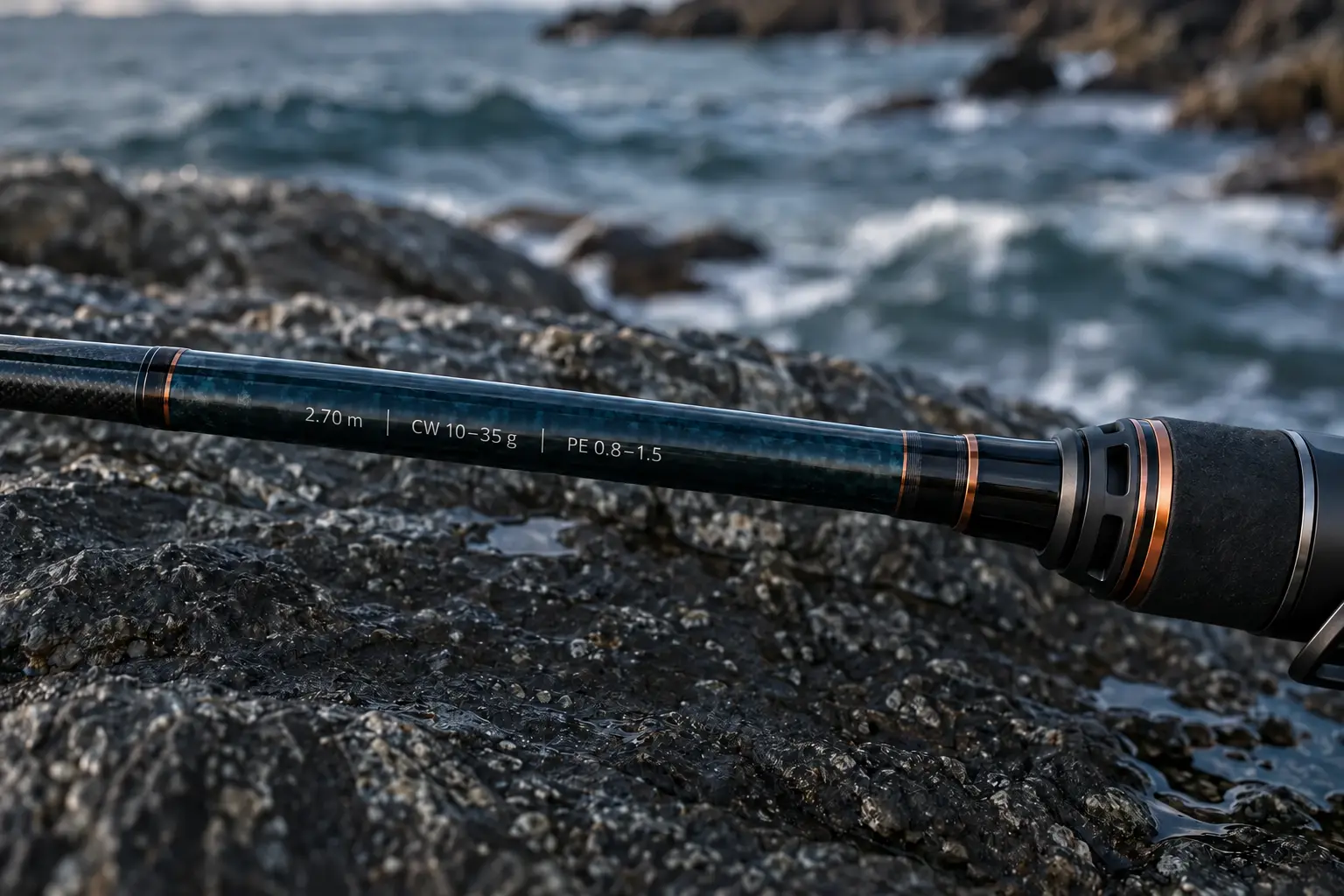
2.70 m · CW 10–35 g · PE 0.8–1.5
CW / lure weight
Casting weight (CW or lure weight) is the maker's rated lure range, such as 10–35 g. Choose a range that includes the lures you use most. A lure near either end may not cast or work as well as one nearer the middle. Do not exceed the maximum rating when casting.
Length
The marking may read 2.70 m or 9′0″. A longer rod helps keep the line above waves or rocks and may aid casting, but adds leverage and can tire your arm. A shorter rod can be easier to handle in tight spaces or when precise lure work matters.
Action and tip
Action describes where the rod bends under load: fast mostly near the tip, moderate or regular farther down the blank. It differs from power, the rod's resistance to bending. A responsive tip helps detect subtle contact; a more progressive bend can maintain tension during a fight. Terms vary across brands.
Rod weight and balance
Weight in grams describes the bare rod, without its reel. Lower weight can make repeated casts easier, but reel balance and handle length matter as much. Hold the complete setup and notice whether the tip pulls your wrist forward.
Line / PE rating
PE 0.8–1.5 is a recommended braid size class, not lure weight or a fixed breaking strength in kilograms. Actual diameter and strength vary by manufacturer. Set your drag with the weakest link in mind, including the leader.
Other markings and checks
Model code, section count, transport length and guide or blank materials may appear on the rod or only in the maker's specifications. UL/L/M/MH/H power is relative to a range, not a universal industry scale. Match the exact model code to the official product table before buying.
Official rod catalogues
For any particular model, confirm CW, length, weight, action and PE on the maker's official product page.